



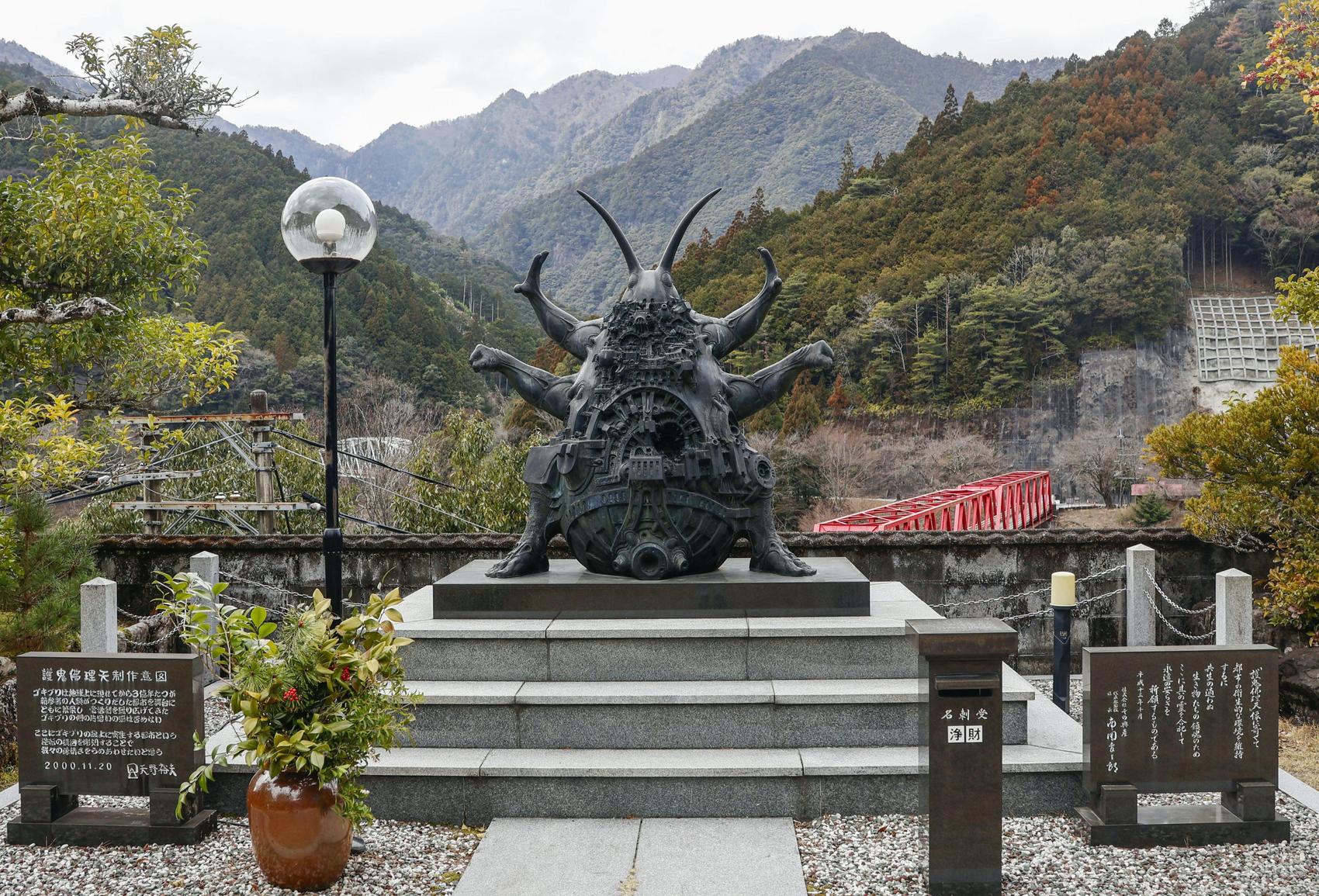
NARA (JAPAN) — In a bid to counter severe depopulation, a remote mountain village in western Japan has found an unconventional savior: a giant, muscular bronze cockroach statue striking a sumo wrestler’s pose. Located at the Rinsenji Temple in Kamikitayama, Nara Prefecture, the bizarre monument has transformed from a quirky pest memorial into an international tourist attraction, breathing new life into a shrinking rural community.
Originally installed more than 25 years ago in November 2000, the 170-centimeter-tall figure is known as “Gokiburiten”—a combination of the Japanese word for cockroach (gokiburi) and a suffix denoting a heavenly deity. Today, it draws steady streams of curious domestic youths and global travelers from as far as China and Poland to this secluded, forested region located a two-hour drive south of Nara City.
A Theatrical Blend of Kabuki and Sumo
The statue, featuring a human-like torso with six limbs—four powerful arms extended outward and two legs firmly anchored to the ground—is the brainchild of 72-year-old sculptor Hiroo Amano from Gifu Prefecture.
“I wanted to create a powerful-looking cockroach,” Amano explained, noting that he deliberately shied away from realism. Instead, he drew artistic inspiration from the dramatic mie poses of Kabuki theater and the ritualistic, high-energy ring-entering ceremonies of sumo wrestling.
In a profound philosophical twist, Amano also embedded a miniature human city within the statue’s abdomen. “When creating this memorial statue, I decided to reverse the roles and depict humans as parasitic on the cockroach,” he stated. Even the name Gokiburi was deliberately rendered in rare kanji characters to impart a sacred tone to the insect deity.
Born from Pest Control, Preserved by Friendship
The monument was originally commissioned by Ryozaburo Minamisono, the 84-year-old founder of Sono, an Osaka-based building maintenance and pest control firm that executes over 2,000 cockroach exterminations annually. Seeking to create something entirely “off the wall” to honor the pests his company eliminated, Minamisono utilized his childhood friendship with the former head priest of Rinsenji Temple to secure the statue’s unique home.
For a village facing steep demographic decline, the steady influx of global tourists has provided crucial economic and social stimulation. Local residents have embraced the attention, using the landmark as a catalyst for cultural exchange with outsiders.
“This statue is a source of strength for me,” said Miho Kojima, the wife of the temple’s former head priest, who has watched the monument’s bronze surface grow smooth and lustrous from decades of visitors polishing it with their hands. Kojima encourages international travelers to approach the site freely and appreciate the unique installation purely “as a work of art.”